Honkai: Nexus Anima Lore Guide: The Sundering & Planes
A lore primer for Honkai: Nexus Anima: the Sundering, the Nexus Threads and 81 Planes, Sovereigns versus Novarchs, and the World-Ender who broke it all.
Honkai: Nexus Anima is built on a broken world. Long ago, a catastrophe called the Sundering shattered the Nexus Threads that held everything together, toppling the old order of Sovereigns and leaving the layered Planes in the hands of new rulers called Novarchs. At the center of it all sits the World-Ender, the threat the survivors are still hunting. If you only remember one thing, remember this: the same concepts that structure the story (Light, Dark, Love, Hate) are the exact Aspects your Anima carry into battle. Learn the lore and you have already half-learned the Aspect system.
Note: the game is unreleased (the Evolution Test ran July 9 to 27, 2026, and there is no release date yet), and its lore is still being revealed. The summary below reflects what has surfaced so far and may be expanded or revised before launch. Community-sourced totals are flagged as unconfirmed where they appear.
Key takeaways
- The Sundering broke the Nexus Threads that bound the world, ending the Sovereigns’ unified rule and creating the fractured present day.
- The world is 81 Planes, layered concept-realms, each tied to an Aspect and governed today by a Novarch.
- Sovereigns are the old order; Novarchs are the current rulers. Many Novarchs were Sovereigns before the Sundering, so the titles mark eras as much as roles.
- The Sundering happened 214 years ago; the present year is 214 NE (New Era).
- The World-Ender caused the Sundering. Nonimir, the 4th Sovereign, sealed it and vanished; the Phoenixbreaker Novarchs still hunt it.
- The paired concepts the Sovereigns ruled are the same 21 Aspects your Anima fight with, which is why lore and team-building share one vocabulary.
- Nexus Battles are law. Victus, the First Sovereign, decreed that nearly all disputes are settled by Nexus Battles, which is the in-world reason the game is built on them.
- You start as a newcomer in Iia, a town in the Plane of Reality, not as any of these rulers.
- Much of the deep lore comes from Zero, a shadowy figure who talks to you early on and who claims your past self is the one who broke the world.
Who is Zero, and why does he know all this?
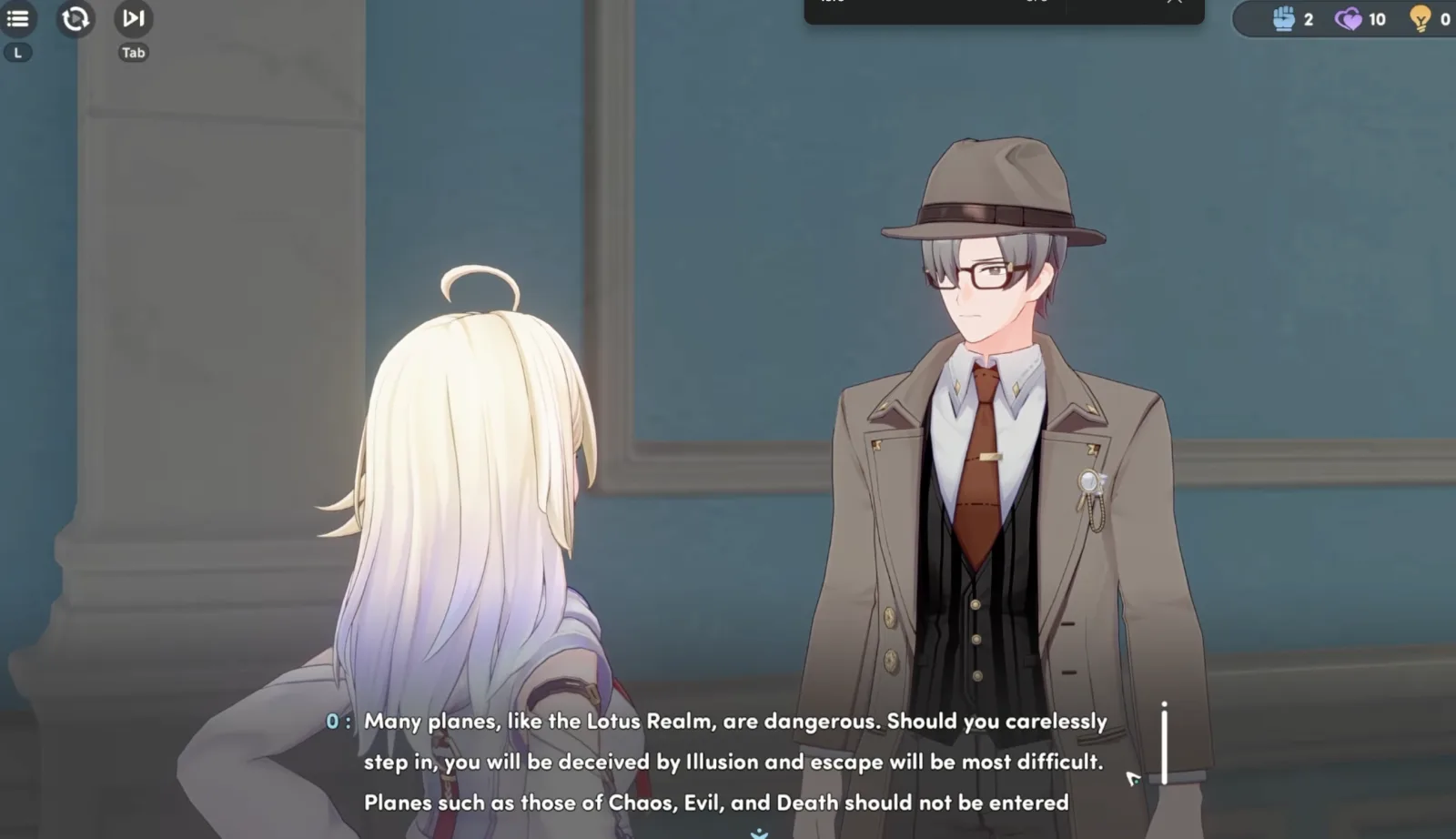
Most of the backstory below reaches the player through one character. Zero (written simply as “0” in the game’s text) appears as a shadowy figure who is described as present yet otherworldly, like a projection pushed through the walls of the Plane. He shifts between looking solid and looking ethereal, and he speaks about the Old World as somebody who was there.
Zero is not his name. He says plainly that it is a label chosen so you can understand and accept him, and that he goes by different names in different Planes. He describes himself in riddles: the circle, the beginning and the end, the number nothing divides by, the default value of every variable.
He is not hostile, and he did not plan the meeting. He puts it down to the Nexus willing it. That matters for reading the rest of this guide, because it means the lore arrives filtered through one cryptic narrator rather than an omniscient one, and he is candid that he has not visited every Plane himself.
Zero appears as a grey-haired figure in a fedora and long coat, here warning that Planes such as Chaos, Evil, and Death should not be entered lightly.
What Zero says about you
The uncomfortable part of Zero’s account is who he says the player used to be. He lists titles from a previous life: World-Ender, Reconstructor of Realms, Sundering Incarnate. In his telling, your past self destroyed a single perfect universe and remade it as 81 Planes.
He leaves the identity question open on purpose, framing it as your decision whether to claim that past or discard it. He also notes that only three beings know your real name, and he is not one of them. Whether the game means this literally or as an unreliable narrator’s provocation is not yet resolved.
The Sundering: the event that broke the world
The Sundering is the catastrophe every faction is reacting to. It broke the Nexus Threads, the connections binding the world, and ended the era in which the Sovereigns ruled a unified order.
What the Old World was
Before it, there was one universe rather than eighty-one Planes. Zero describes it as a single complete world where everyone shared the same sky and the same air, and where the magic people wielded was called Aspects. It was far more crowded than the present: dragons, humans, fae, and orcs all lived alongside each other, under the rule of the 39 Sovereigns.
People now call it a Golden Era, which Zero finds a little rich. His observation is that nobody living in it thought so at the time, and that humans reliably scorn what they have until they lose it.
The Sundering was not a partial collapse. In Zero’s account the Old World was annihilated first and reborn second, coming back as 81 independent Planes cut off from one another. The answers the player is looking for were shattered along with it, and the pieces are now scattered across the Planes. Sir Champion is said to hold one of them.
When the Sundering happened
The game’s codex is specific: the World-Ender triggered the Sundering 214 years ago. The calendar counts from it, so the present story year is 214 NE, the New Era, and the Romanesque Hall finals are dated “the 214th year of the New Era”. The codex also gives the event two other names, “the Sundering of the World” and “The Big Rip”, and says its reason is unknown.
An in-world history book adds the ground-level view: in a single moment, all the Planes appeared, and humans and Nexus Anima found themselves thrown together, with cities that looked copied and pasted from elsewhere. The first people to team up with Anima became the first generation of Animasters.
Why everything is settled by Nexus Battles
The present-day rules come from one man. Victus, the First Sovereign of Order and Chaos, is now the Novarch of Order, and “it is said that he established the Principles of the New World, decreeing that nearly all disputes must be settled through Nexus Battles.”
Each Nexus Battle happens in a Semiplane: “the Aspect Energy of both sides’ Anima creates a tiny, temporary Plane, which dissipates after the duel.” That is the lore behind the auto-chess board, and why the formation guide matters as much as it does.
Think of it as the setting’s dividing line. Almost every character and location is defined by which side of it they belong to. The rise of the Novarchs, the hunt for the World-Ender, the factions scattered across the Planes: all of it is downstream of that single fracture.
When a character’s story references “before the Sundering,” they are pointing back to that lost order, usually with loss, ambition, or a grudge attached. When it references “after,” you are in the present day, the world you actually play in.
That framing matters for a practical reason. As new Anima and Eidos are revealed during the beta, the fastest way to place a new name is to ask a single question: were they part of the old order, or are they navigating the wreckage of it? Almost everyone falls cleanly into one bucket or the other.
The 81 Planes and the Nexus Threads
The world is not one place but many. It is 81 Planes, layered concept-realms, each tied to a concept and its Aspect. The Nexus Threads are what once connected them, and the Sundering is what damaged those connections.
A few Planes are named directly in the roster’s stories:
| Plane | What it is | Player relevance |
|---|---|---|
| Plane of Reality | Home of the starting town, Iia | Where your account begins |
| Plane of Satiation | The Plane tied to the Satiation concept | Home ground for the Novarch Hungrille |
| The Peak | A high Plane mastered by the 22nd Novarch | Blade’s domain |
Zero’s dialogue names a good many more, and it is worth knowing that the Planes vary enormously in scale. Some are described as vast, others as cramped as a trough of dust.
| Plane | Aspect | What Zero says about it |
|---|---|---|
| The Material Lip | Reality | Large and the least damaged by the Sundering, with nine continents |
| The Lotus Realm | Illusion | Nobody knows its true shape; entering it blooms a Mirage Lotus, and leaving wilts it |
| Pontus | Life | An untamed ocean where life grows without limit, and the most majestic he has seen |
| The Changelands | Change | Terrain that rewrites itself moment to moment, paths turning into brooks |
| Trail of Trials | Not stated | A peak above the clouds, and a trail that never ends |
| Hullabaloo | Not stated | Millions of voices composing a single song |
| Sahaloka | Memory | Crystals that reflect the memories of countless lives |
| Esherfold | Not stated | A Plane where nothing you see makes sense |
| Snuggie Crib | Not stated | Residents sleep on soft white blankets and dream like infants |
The Material Lip is the one to know, because it is where you are. Its size and its proximity to many other Aspects make it complex but sheltered from the more extreme concepts. All nine of its continents are named in an in-world book: Karkacia, Adoras, Sambadia, Crankwirshaft, Lusciell, Fuyu, Urlan, Helania-Cassipu and Noggintop. The world guide gives each one’s nickname and ruling idea. Karkacia’s great canyon is where the name “Material Lip” comes from. Lusciell, the second continent, is home to the town of Iia and to Romanesque Hall, one of the arenas that hosts the Grand Championship.
Zero is blunt that some Planes are simply lethal. He singles out Chaos, Evil, and Death as ones you do not wander into, and warns that the Lotus Realm will trap you in illusion and make leaving very hard. He also drops a lead: two old friends are waiting in the Planes of Order and Death, and would be surprised to see you. The Planes of Life and Death have produced no Novarchs and are still ruled by the former Sovereign Amstradath.
Each Plane falls under the domain of a ruler, and each ruler is bound to the concept that Plane embodies. That is the crucial link: a Plane is not just a map region, it is a concept made into a place. The Plane of Satiation is “satiation” as geography, the same way an Anima’s Aspect is a concept made into a creature.
Understanding that the world is a web of concept-Planes is the key to why Aspects matter as much in the lore as they do in your formations. The map and the battlefield run on the same idea.
Sovereigns vs. Novarchs: two eras of power
Two titles come up constantly, and they mark different eras.
The game’s own definition is one sentence: “Those who govern a pair of Aspects are Sovereigns, while those who govern a single Aspect are Novarchs.”
- Sovereigns were “the owners of the Old World’s Aspects”. Each mastered a paired set of concepts, for example Love and Hate, or Reality and Illusion. When the Nexus shattered they lost control “in an instant”.
- Novarchs are “the owners of the New World’s Aspects, and each holds dominion over one of the 81 Planes”. The codex adds that not every Novarch bothers to govern: “They are 81 willful rulers, answering to none.”
- Fallen Sovereigns are a third group: Sovereigns who failed to become Novarchs and kept only a fraction of their old power.
The two orders overlap
The catch that trips up most new players is that these are not two separate casts. Many Novarchs were once Sovereigns. The Sundering knocked the old order down, and some of its survivors climbed back into power under a new title.
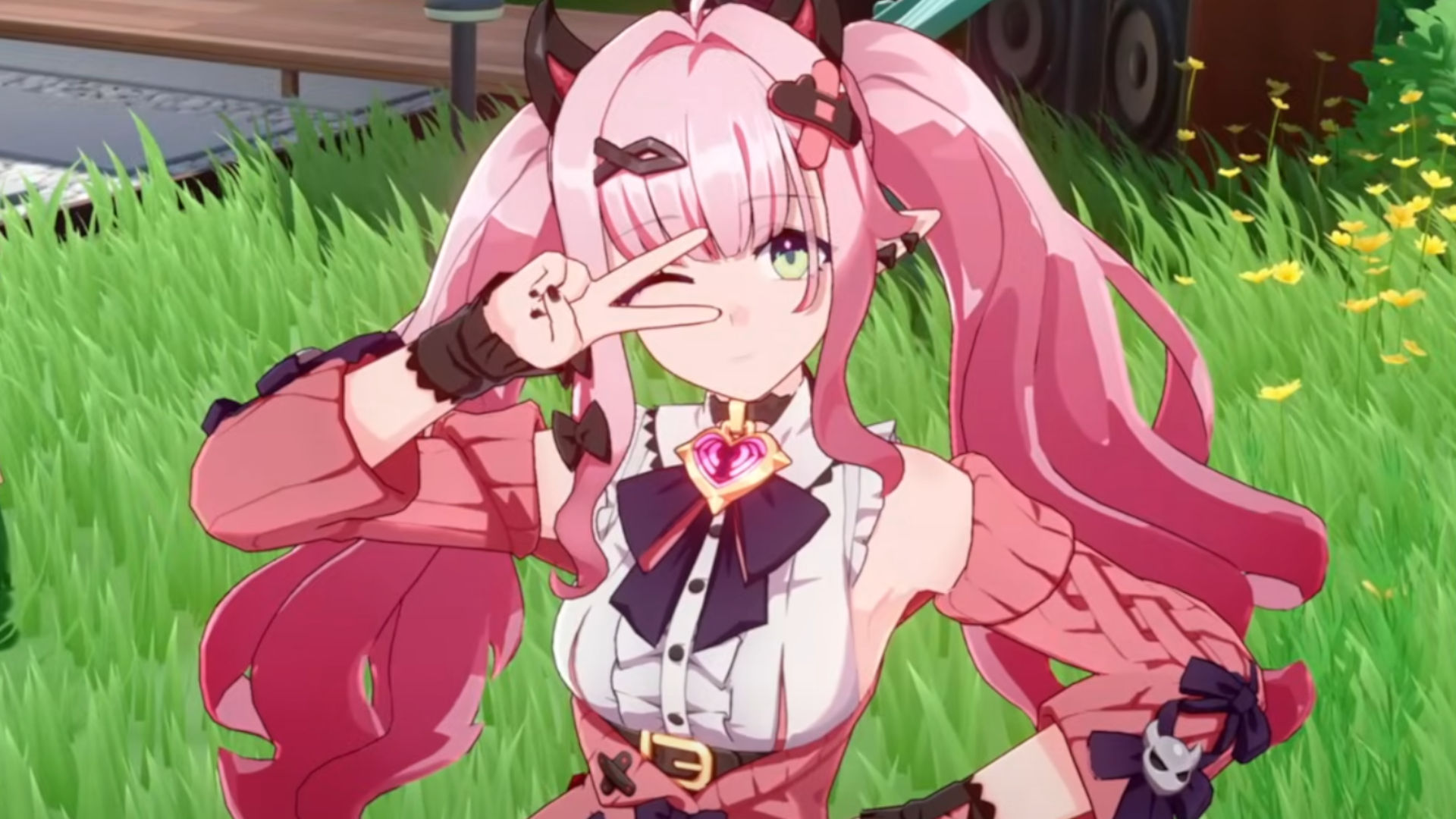 Parayaya ruled Love and Hate as the 14th Sovereign, then became the Novarch of Hate after the Sundering.
Parayaya is the cleanest example. She was the 14th Sovereign who mastered Love and Hate, and after the Sundering she became the 29th Novarch of Hate. Same person, two eras, and only one of her two old concepts survived into her new title. That detail, a Sovereign’s paired concepts splitting apart, hints at just how much the Sundering cost.
You can see this churn laid out across the Eidos database, where titles like “The 8th Sovereign” and “The 29th Novarch” sit side by side on the same characters.
The known ruling lineups
Community sources suggest there may be roughly 39 Sovereigns and 81 Novarchs in total, though both figures are unconfirmed estimates. What is confirmed is a handful of specific rulers whose stories are already revealed:
| Figure | Sovereign era | Novarch era |
|---|---|---|
| Nonimir | 4th Sovereign (Reality & Illusion) | Vanished after sealing the World-Ender |
| Parayaya | 14th Sovereign (Love & Hate) | 29th Novarch of Hate |
| Armand | 8th Sovereign (Light & Dark) | 17th Novarch of Darkness |
| Blade | Guard to the Sovereign Kafka | 22nd Novarch, master of The Peak |
| Sir Champion | formerly a Sovereign | 34th Novarch of Competition |
| Prabhas | not stated | 16th Novarch of Light, the Sunfire Monk |
| Bai Mei | not stated | 8th Novarch of Reality |
| Hungrille | not stated | 68th Novarch of Satiation |
| Lucian Valentine | 20th Sovereign (Courage & Cowardice) | Novarch of Courage |
Notice the concept pairings. Every Sovereign governed a pair of opposing concepts, which is the structural rule of the old order and the thing the Sundering broke.
The named Sovereigns and their paired concepts
Zero’s dialogue and the codex name sixteen Sovereigns directly. This comes from in-game dialogue rather than published material, so treat the list as current best knowledge rather than a final roster.
| Sovereign | Paired concepts |
|---|---|
| Victus | Order and Chaos |
| Amstradath | Life and Death |
| Kafka | Strength and Weakness |
| Big Boss Daddy | Profit and Loss |
| Qing Gang | Good and Evil |
| Sir Champion | Competition and Cooperation |
| The Masked Hero | Courage and Cowardice |
| Nonimir | Reality and Illusion |
| Lestrange | Joy and Sorrow |
| Armand | Light and Dark |
| Troth le Fay | Beauty and Ugliness |
| Parayaya | Love and Hate |
| Darsea | Memory and Oblivion |
| Malheur | Fortune and Misfortune |
| Bashirdo | Change and Stasis |
| Apeiron | Finity and Infinity |
Which of them was strongest was apparently a bar argument in the Old World too. Zero reports the popular answers as Victus and Amstradath at the top, with Kafka and Big Boss Daddy close behind, and Qing Gang rated highest on raw individual power alongside Victus. He also notes the debate is now academic, since the Sovereigns are gone.
The player has history with at least two. Zero says you fought both Victus and Sir Champion, and that Victus came close to killing you. What saved you was a deal struck with Amstradath, the Sovereign of Life and Death, which is the kind of detail that tends to become a plot point later.
Vanished and fading
The Sundering did not just demote the Sovereigns, it removed most of them. Zero lists Qing Gang, Nonimir, Kafka, and Lestrange among those who simply disappeared, and says the count of those still around is now the shorter list.
The survivors are on a timer of their own. Zero describes their command of the Aspects as dwindling like a candle in the wind: the gates of the Aspects have not shut on them completely, but he treats that as a matter of time rather than an open question.
Others are accounted for in the codex. Bashirdo and Troth le Fay went missing after the Sundering, Malheur was never seen again, and Apeiron, long rumoured dead, reappeared afterward.
Three Sovereigns were especially close to the player. Zero names Darsea, Malheur, and Parayaya, says they were at your side constantly, and says they paid dearly for it. The game marks this as something the player feels rather than remembers, a sense of having hurt or betrayed all three.
Novarchs: the false kings
Zero is not complimentary about the current order. He calls the Novarchs the false kings who replaced the Sovereigns, allows that all eighty-one shine differently, and says plainly that not all of them deserve the Aspect powers they hold.
He also flags the arithmetic problem: 39 Sovereigns became 81 Novarchs, and the numbers do not divide cleanly. He calls the connection subtle and does not explain it, though the player half recalls that their previous self knew the answer. Some Sovereigns seized a Novarch seat during the Sundering: Zero names Victus and Armand, and Sir Champion, The Masked Hero (now Lucian Valentine, Novarch of Courage) and Parayaya also hold Novarch titles today. Each kept only one half of their old pairing. Victus ruled Order and Chaos, and now rules Order alone.
A group of Novarchs has since sworn to find the Reconstructor of Realms, meaning you. Zero’s warning is that their intentions split: some mean to destroy you, some mean to help, and which is which may depend on choices you have not made yet.
Reading the numbered lines
The numbers attached to each title are worth a moment. A “29th Novarch” is the 29th holder of that particular Novarch line, not the 29th Novarch overall, which is why you see the 8th, 16th, 22nd, and 34th all active in the present day. The same logic applies to Sovereign numbering.
In practice, this means a low number does not mean a character is old and a high one does not mean they are new. The number tells you position in a line of succession, and the era prefix (Sovereign versus Novarch) tells you whether that line sits before or after the Sundering. When a character holds both, like Parayaya or Armand, the pairing is the whole story: it shows you exactly how far they fell and how they climbed back.
The World-Ender and the Phoenixbreakers
The World-Ender, also called the Reconstructor of Realms and the Sundering Incarnate, is the figure the codex holds responsible: “214 years ago, they triggered the Sundering, breaking the Nexus.” Two threads define the current hunt.
First, Nonimir, the 4th Sovereign of Reality and Illusion, sealed the World-Ender within the Plane of Illusion and then vanished. The codex says he did it to keep a promise to his younger sister, Darsea. Nonimir was playable in the CBT1 Nexus Bond Test under the name Kumyo Kyo, which is why older coverage uses that name.
Second, the Phoenixbreaker Novarchs are hunting the World-Ender. Parayaya hates them for a betrayal, Blade wants revenge for his Sovereign, Kafka, who vanished after the Sundering, and Amorphiron, the Novarch of Change, says he simply wants to watch.
The Phoenixbreakers are not heroes. They describe themselves as “a ragged little fellowship of downtrodden yet devoted Novarchs”, and they are hunters, not allies.
This is the through-line most of the confirmed Eidos plug into. They are either former Sovereigns, current Novarchs, Phoenixbreakers, or ordinary people caught up in the aftermath, such as the town staff you meet early on. When you meet a new character in the Eidos guide, placing them on this map is usually enough to understand their motive.
Aspects: where lore meets the battlefield
Here is the payoff for players. The paired concepts the Sovereigns ruled, Light and Dark, Love and Hate, Reality and Illusion, are the same Aspects your Anima carry into an auto-chess formation.
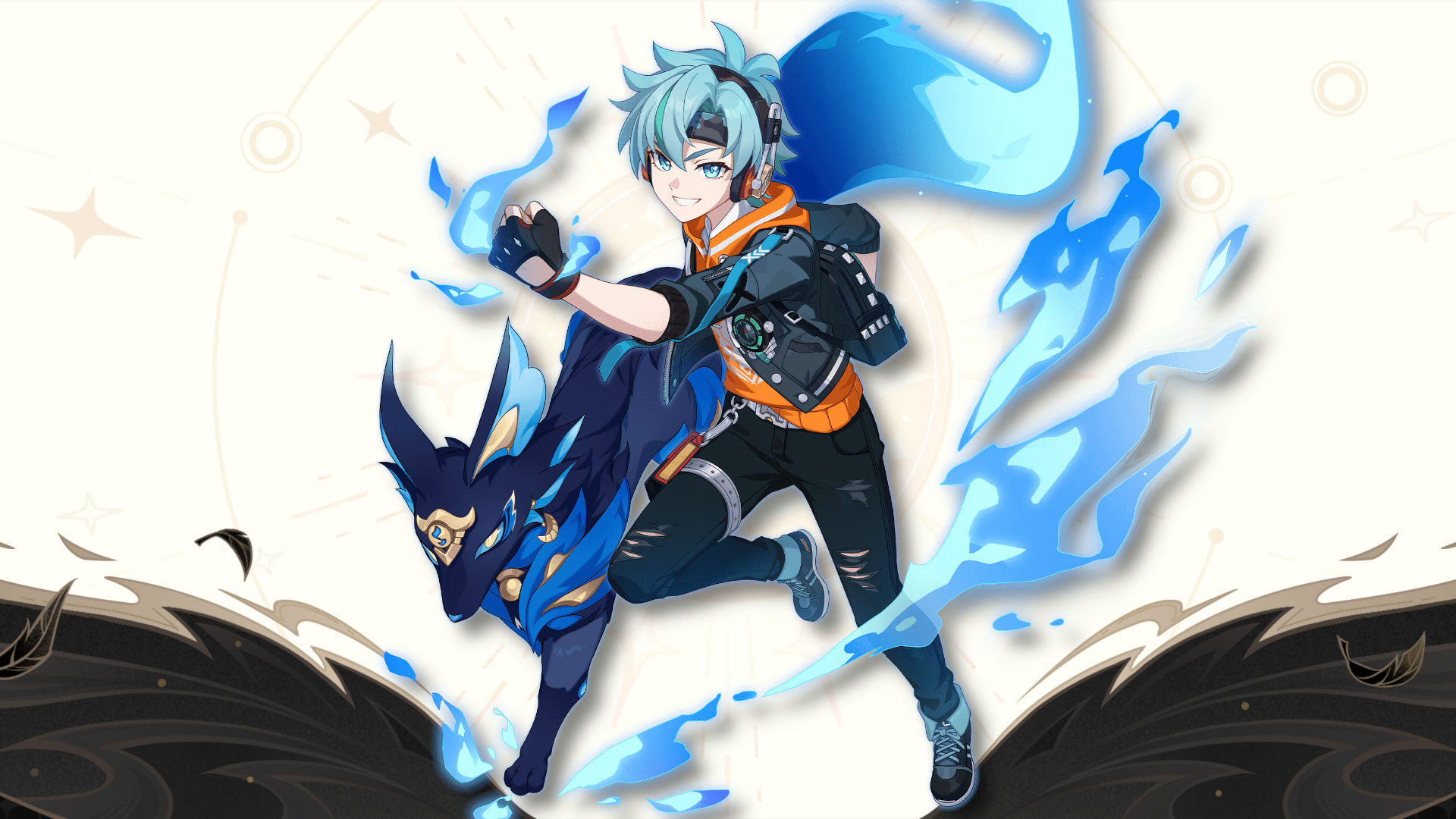 In the present day, ordinary Eidos bond with Anima across the fractured Planes.
The game’s glossary is explicit about where Anima come from: they are “Energy lifeforms born from the broken Nexus,” whose forms and natures are shaped by the Aspects tied to their origin.
The setting and the strategy layer share one vocabulary. An Anima’s Aspect is its slice of the world’s conceptual fabric, and stacking a shared Aspect on your team is, in-fiction, aligning your formation with a single strand of that fabric. There are 21 Aspects on the current catchable roster, and they map directly onto the concepts the Sovereigns and Novarchs are named for.
That connection is not just flavor. When you decide to build a mono-Hate or mono-Light team, you are choosing the same concept a Sovereign once ruled. For the mechanical half (how many matching Anima trigger the synergy bonus and how it scales), see the Aspect synergy guide and try a draft in the team builder.
The corrupted side of Aspects
Aspects are not purely a menu of buffs. Two darker concepts show up in the lore: Aspect contamination and obliviosis (the game also spells it “obliviasis”).
Obliviosis is a memory-loss disease that has spread since the Sundering, and doctors suspect it is tied to the death of Darsea, the Sovereign of Memory and Oblivion. Aspect contamination hits Anima: in Iia it shows up as Aspect Fractures. Kiana, a Planestrider, handles contaminated Anima, and Otto is researching the origins of obliviosis and a cure. These threads hint that the conceptual fabric can rot, and that keeping Anima healthy is part of the world’s ongoing struggle, not a solved problem.
For players, the takeaway is simple: Aspects are a living, sometimes dangerous part of the world, so expect corruption-themed content and characters to keep appearing as the beta expands.
How the lore connects to what you actually do
You do not play as a Sovereign or a Novarch. You start as a newcomer in Iia, a town in the Plane of Reality, bonding with Anima and building formations. The grand history is the backdrop your small story unfolds against.
That framing is worth keeping straight, because it explains the game’s structure:
- You bond Anima carrying the Aspects the old rulers were named for (see the Anima dex).
- You build formations around those Aspects, which is the strategy layer the lore quietly sets up.
- You meet the rulers as story characters and roster Eidos, not as bosses you replace.
If you want to go deeper on the people, the Eidos guide and bond guide cover the roster and relationship systems. If you would rather get straight to playing, the beginner progression guide and reroll guide get you moving without any lore homework.
Bottom line
The Sundering broke the Nexus Threads, ended the Sovereigns’ era, and left the Novarchs ruling 81 concept-Planes while the Phoenixbreakers hunt the World-Ender that Nonimir once sealed. The Aspects your Anima fight with are the same concepts that structure the whole setting, which is why the lore is worth a look even if you are here purely for the auto-chess.
For the continents, the other Planes and the factions that run Iia, carry on to the world guide.
You do not need any of it to play well, so treat this as context, not homework. Meet the players in the Eidos guide, see how Aspects drive teams in the Aspect synergy guide, and check the tier list when you are ready to turn all this into a winning formation.
Frequently asked questions
- What is the Sundering in Honkai: Nexus Anima?
- The Sundering, also called "The Big Rip", is the event that tore the paired Aspects apart and rebuilt one universe as 81 separate Planes, 214 years before the story. The calendar counts from it: the present is 214 NE, the New Era. The game says its cause is unknown.
- What are the 81 Planes?
- The Planes are the layered realms that make up the world of Honkai: Nexus Anima, 81 in all, each tied to concepts and Aspects. Named examples include the Plane of Reality, the Plane of Satiation, and "The Peak." Novarchs are the figures who rule over them.
- What is the difference between a Sovereign and a Novarch?
- The game defines it in one line: "Those who govern a pair of Aspects are Sovereigns, while those who govern a single Aspect are Novarchs." Sovereigns ruled the Old World; the 81 Novarchs each hold one Plane now. Some Sovereigns became Novarchs, others vanished, and those who failed to become Novarchs are called Fallen Sovereigns.
- Who is the World-Ender?
- The World-Ender, also called the Reconstructor of Realms, is the figure who triggered the Sundering. Nonimir, the 4th Sovereign, sealed the World-Ender in the Plane of Illusion and then vanished. The Phoenixbreaker Novarchs, Parayaya, Blade and Amorphiron among them, are hunting the World-Ender for revenge.
- How does the lore connect to Aspects and Anima?
- Aspects are the conceptual identities that run through everything: the paired dualities the Sovereigns ruled (Light and Dark, Love and Hate) are the same Aspects your Anima carry into battle. The lore and the team-building layer share one vocabulary of concepts.
- Do I need to know the lore to play Honkai: Nexus Anima?
- No. You can build formations, reroll milestone picks, and climb the tier list without ever reading the story. But the lore names the Aspects you fight with and the Eidos on your roster, so a little context makes the systems easier to remember and the reveals more fun.
- Where does the game start, and who runs it?
- The starting area is Iia, a town on Lusciell, one of nine continents on the Plane of Reality. Iia is run day to day by the Committee for a Joyful Iia. You begin there as a newcomer bonding Anima, not as one of the rulers, though the story soon suggests your past is bigger than it looks.